
Now that summer is well underway, it’s a good time to bust a couple of common lawn care myths.
These ideas have been around for years, and while they sound logical, they often lead to weaker lawns and more work in the long run.
As I drive around Kodiak, I often notice public and private lawns being mowed very short. It may save a little mowing in the short term, but slightly taller grass develops deeper roots, stays healthier, and naturally crowds out more weeds.
Let’s start with one of the most common myths.
Lawn care myth #1: Cut your grass short so you don’t have to mow as often
I’m not sure where this idea came from, but I see—and hear about it—all the time.
The thinking goes like this: if you mow the grass very short, there is less leaf surface to capture sunlight. With less sunlight, the grass produces less food through photosynthesis, grows more slowly, and doesn’t need mowing as often.
There is some truth to this.
Grass that is cut very short does grow more slowly. The problem is that it also becomes stressed, less healthy, and more susceptible to weeds, drought, and disease. In the end, you often create more maintenance instead of less.
Why does a lawn look brown after mowing?
If you’ve ever wondered why a lawn sometimes looks brown right after it’s been mowed, chances are it was cut too short. The mower removes the green tips of the grass blades and exposes the paler lower portions of the leaves, giving the lawn a brown, scalped appearance.
Grass blades do much more than make your lawn look green. They shade the crown of the plant—the area where new leaves develop—and help keep both the crown and the soil cooler. Taller grass also reduces moisture loss, which is especially important during warm, dry weather.
(Rare in Kodiak, but it does happen.)
Even in cool climates, taller grass wins
Yes, even here, where summers are generally cool, mowing higher has real benefits.
Our long daylight hours encourage steady grass growth, and a taller lawn develops a deeper, stronger root system that is better able to handle periods of dry weather, foot traffic, and other stresses.
The taller blades also help crowd out weeds by shading the soil, making it harder for weed seeds to germinate.
Taller grass helps your lawn survive winter
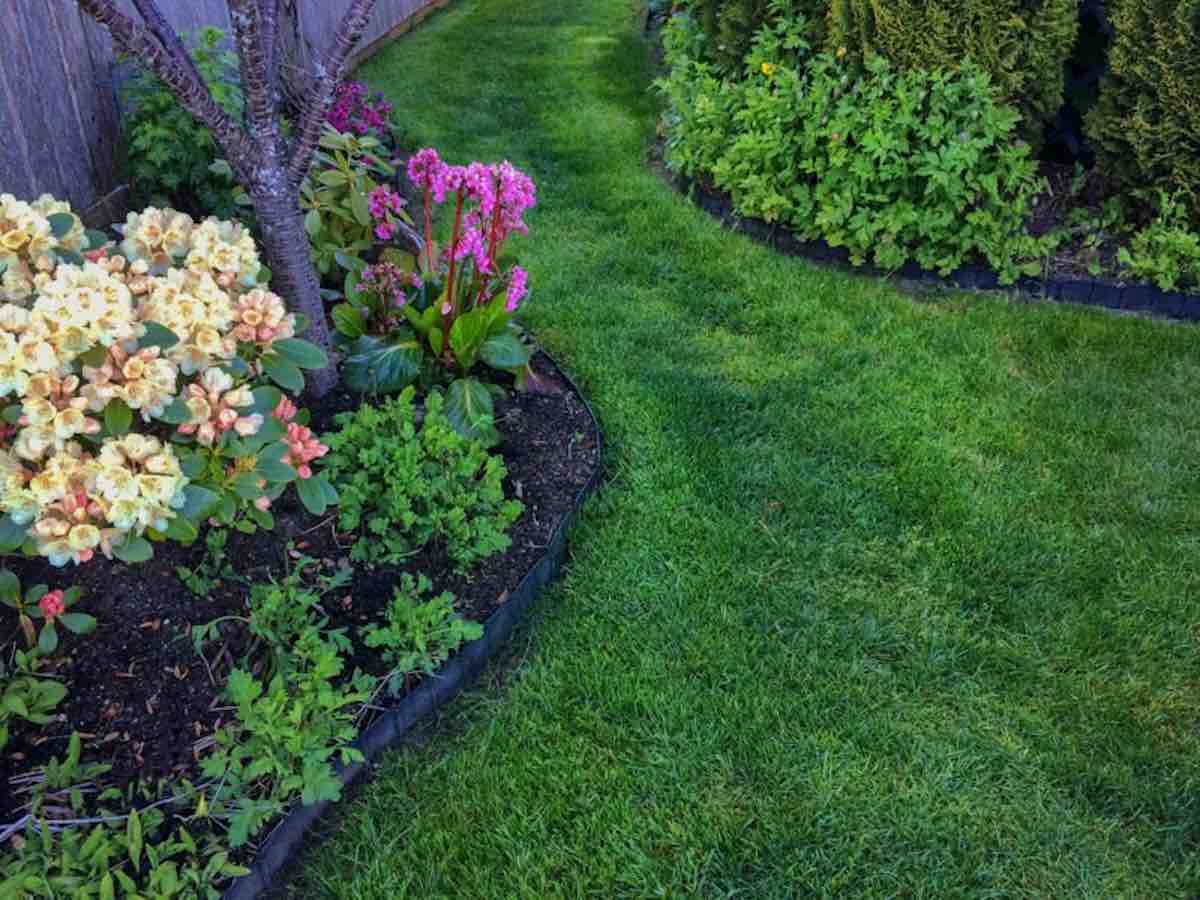
Mowing a little higher also helps the lawn prepare for winter. So does feeding your lawn with compost. It’s easier than you think. Watch this video to see how we maintain a beautiful, green lawn, as in the photo above.
Taller grass produces more food during late summer and fall, allowing the plant to store energy in its roots and crown before winter arrives. That stored energy helps the lawn survive months of cold weather and green up more quickly the following spring.
Cutting grass too short removes much of the plant’s food-producing factory. It also reduces the food reserves the plant needs for healthy growth and root development. If you remove too much blade at one time, the grass must spend its energy replacing leaves instead of strengthening its roots.
Why short grass encourages more weeds
The extra sunlight reaching the soil also encourages weed seeds to sprout. Before long, you’re spending more time pulling weeds—or applying weed-control products—than you saved by mowing less often.
Quick tips for mowing your lawn
- Maintain most cool-season grasses at a height of 2½ to 3 inches.
- Never remove more than one-third of the blade in a single mowing. Removing more than that places unnecessary stress on the plant.
- Don’t mow because it’s Monday or Saturday. Mow because the grass has grown enough to need it.
Now, on to our second myth…
Lawn care myth #2: Add lime to your lawn to get rid of moss
When people ask why moss grows in lawns, the two most common answers are: “too much shade” and “acidic soil.”
The second explanation often leads people to spread lime or apply a moss killer.
The problem is that there are hundreds of species of moss, and they grow in many different environments. Any simple rule for controlling moss is bound to be wrong some of the time.
Does lime really get rid of moss?
While some mosses prefer acidic soil, it’s good to know that others grow quite happily in alkaline soil. Not that we’d see alkaline soil here, but it helps illustrate an important point:
Adding lime is not automatically the solution.
Kodiak’s native soil is on the acidic side. So if your soil truly is too acidic for growing healthy grass—and you haven’t been amending it with compost or other organic matter to bring it closer to neutral—adding lime may help correct the pH.
But unless a soil test shows that’s the problem, adding lime is unlikely to get rid of the moss. In some situations, it can even make things worse.
The real issue is usually that the grass is struggling. Dressing your lawn with compost, at least twice a year, will oftentimes cause moss to “fade away.”
Here’s a video that explains our compost setup and how you can get started with composting.
Moss is usually a symptom, not the problem
Moss is one of those plants that thrives where other plants have difficulty growing.
Common causes include:
- Too much shade
- Soil that stays too wet for too long
- Compacted soil with few air spaces
- Poor fertility (there’s that compost thing again)
- Grass cut too short
When you have moss in your lawn, the moss isn’t really the problem.
The real problem is that you’re trying to grow grass in conditions that don’t favor grass. When the lawn becomes thin or weak, moss simply takes advantage of the opportunity.
Healthy, vigorous grass naturally outcompetes moss.
Do moss killers work?
Most moss-killing products contain a form of iron sulfate. Iron is toxic to moss, so these products usually turn it black within a short time. You can also rake or dig out the dead moss and remove it physically.
The problem is that neither solution lasts very long.
If you don’t correct the conditions that weakened the grass in the first place, the moss will simply return.
Instead, improve the lawn by addressing the underlying cause.
Quick tips for getting rid of moss
- Reseed with shade-tolerant grass varieties.
- Aerate compacted soil.
- Add compost or other organic matter.
- Prune or limb up trees to allow more sunlight to reach the lawn.
- Water during extended dry spells.
- Raise your mowing height to encourage stronger roots.
Moss doesn’t always grow in shade
Another common myth is that moss only grows in shady, damp places.
While many species do prefer those conditions, others thrive in full sun and even in surprisingly dry locations. If conditions are poor for growing grass, there is probably a species of moss willing to move in.
The long-term solution
Trying to remove moss without improving the lawn is usually a losing battle.
The long-term solution is to create conditions where grass grows vigorously enough to outcompete the moss.
And in some shady areas, you may decide that moss is actually the better choice. It stays green, requires very little maintenance, and can make an attractive, natural ground cover.
Easy-peasy.
Thanks for being here… and for being you!
Have a great week!
~ Marion
PS Be sure to check out my new website, The UpBeet Gardener
PPS -And if you’d like to get weekly gardening tips and life-inspirations, you can sign up for my newsletter here: https://success.gardenerscoach.com/newsletter